
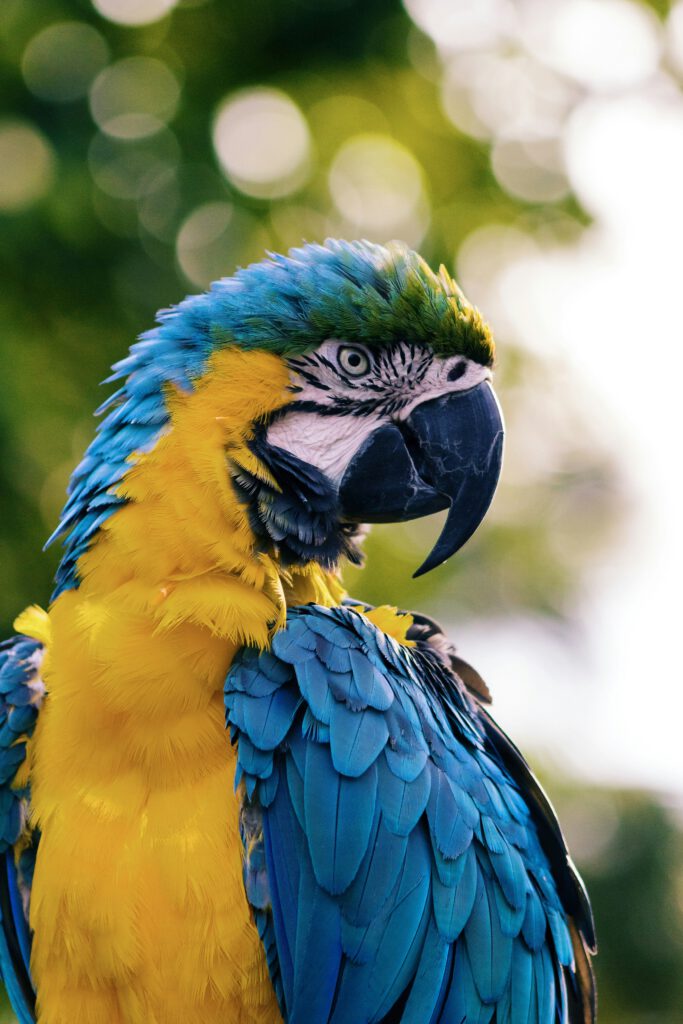
Psittacine birds, including parrots, macaws, cockatoos, and related species, present high levels of intelligence, social complexity, and emotional sensitivity. They are especially vulnerable to boredom, social isolation, insufficient stimulation, and inadequate environmental management.
This protocol promotes husbandry models aimed at preserving psychological stability, social welfare, and behavioral health. Key recommendations include appropriate social interaction, daily environmental enrichment, opportunities for exploration, foraging, manipulation, vocal expression, and safe flight or movement whenever possible.
Prolonged isolation, constant exposure to intense noise, and continuous confinement in small or unstimulating spaces should be avoided. The protocol also promotes early detection of chronic stress indicators such as feather plucking, excessive vocalization, apathy, repetitive behaviors, aggression, or self-directed behaviors linked to welfare deficits.
The objective is to promote advanced avian welfare standards that recognize the cognitive and emotional complexity of psittacine birds.